by: Soma Bose
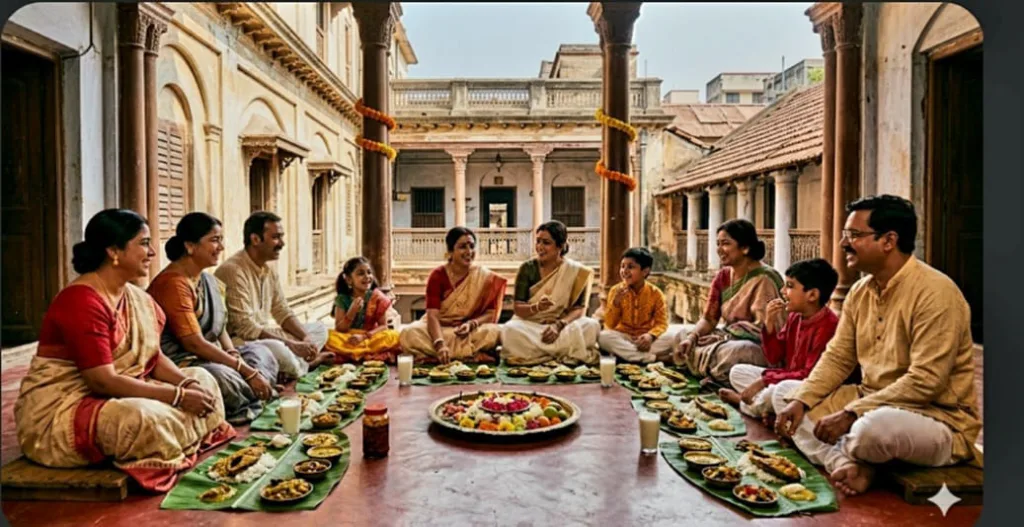
Not too long ago, in our homes, relatives would arrive unannounced as was the custom and would often be served dinner and requested to stay the night. It was never an intrusion – it was expected. I remember the pure glee of us youngsters when the favorite aunt or uncle or cousin stayed back. It meant more stories, more jokes and more fun. Now in my matured years I wonder how Ma could rustle up a delicious dinner within a short span of time with practically no help.
The fact that she cooked a fragrant ‘ilish jhol’ and served it with hot rice was actually no magic. Ilish itself cooks fast and the accompanying vegetables such as brinjal, raw plantain, and pointed gourd does not take too long to cook either. Icing on the cake was the addition of ‘bori’ dried lentil dumplings which added an extra zing to the dish.
Conversation at the dining table with such a menu, tended to be centered on ilish. It started with the tales of yore when my father was a kid himself in a remote village in far off Bangladesh to the practiced skill of judging an ilish by its size and form which guaranteed its taste and also qualified one with the required education to buy one of its kind from the deceiving fishermonger. We were so passionate that Baba used to pack a whole ilish in the boot of his car while returning from his office work in Kolaghat.
As children such technicalities flew tangent over our heads. We had our own games – who could resist the temptation of wolfing down the fish and keep it intact proudly reigning over our ‘thala’ dinner plates. The last person was the first if you get what I mean.
Post partition my paternal grandparents settled in Shantipur a sleepy old town in Nadia district in West Bengal. Every year all of us used to meet at this ancestral house during Durga Puja. Ilish freshly caught from nearby Ganga often used to be purchased by my uncles or father to be cooked and served during the Puja days. In fact, I remember my brothers scouted the local market early in the morning and if the catch was good, would hurry back to inform my father or other uncles. They in turn would saunter into the market and carry back the fish which was already prebooked by my brothers. The fish used to be so fresh that it was sacrilege to think of any method of elaborate cooking. Black nigella seeds used to be tossed in the steaming mustard oil in the wok and a delicious aroma wafted in the kitchen with just the fish, turmeric and salt added in the pot.
Bio Line – The writer is a Kolkata -based former banker who explores memory, food and everyday heritage in Bengal.